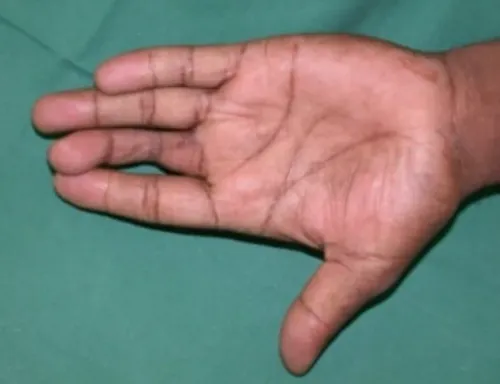



What to expect at your visit with a hand surgeon?
Depending on your condition, most hand surgery visits will include the following:
- The surgeon will ask questions to get a history of your condition so they can better understand your symptoms.
- This will typically be followed by a physical exam with a focus on the area of your upper extremity that is troubling you.
- The surgeon may obtain X-rays at the time of your visit to look at the bones in your hand/wrist.
- If further information is needed to make a diagnosis or plan treatment, the surgeon may order nerve studies, computed tomography (CT) scans, magnetic resonance imaging (MRI) scans, ultrasounds, or other diagnostic tests.
Hand surgeons often recommend nonsurgical treatment options, including:
- Hand therapy, a combination of physical and occupational therapy designed to restore movement and reduce or eliminate pain.
- Injections. Many hand/wrist conditions respond to steroid injections, which can be performed in the office.
- Medication. Some conditions might respond to prescription or over-the-counter medications, such asnon-steroidal anti-inflammatory drugs (NSAIDs).
For patients with surgical conditions or conditions that do not improve after nonsurgical treatment, surgery may be recommended. Depending on the condition, surgery may be urgent (e.g., fractures or infections) or elective (e.g., carpal tunnel syndrome, arthritis), which will affect the timing of surgery.