
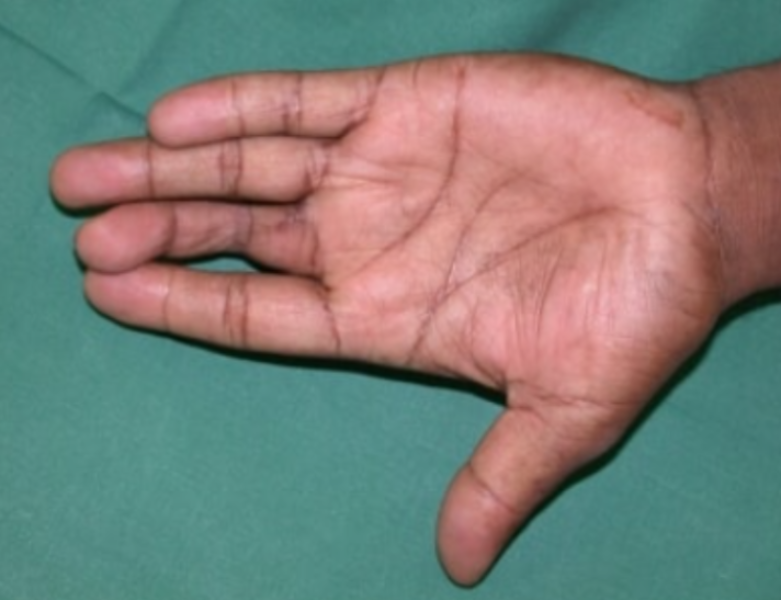
A hand deformity may develop after an injury, arthritis, tendon imbalance, nerve damage, congenital difference, previous surgery, or another condition affecting the bones and soft tissues. Some deformities mainly alter appearance. Others progressively interfere with grip, finger movement, strength, or everyday tasks.
For people considering hand deformity correction in Bangalore, the key question is whether the deformity is causing a functional problem that can be meaningfully addressed.
When Does a Deformity Need Evaluation?
A visible difference does not always require surgery.
Specialist evaluation becomes particularly relevant when the deformity causes
- Difficulty gripping objects
- Reduced finger movement
- Persistent pain
- Progressive change in finger position
- Problems with hygiene
- Difficulty wearing gloves
- Recurrent skin irritation
- Loss of pinch strength
- Interference with work
- Difficulty performing daily activities
A deformity that has changed recently also deserves assessment.
The Cause Determines the Treatment
Two hands may appear superficially similar while having completely different underlying problems.
For example, abnormal finger position can result from joint damage, tendon imbalance, bone malalignment, nerve dysfunction, or soft-tissue contracture.
Treatment therefore begins with identifying the structure responsible.
Clinical assessment may examine
- Joint flexibility
- Tendon function
- Muscle strength
- Sensation
- Bone alignment
- Skin condition
- Grip
- Pinch
- Overall upper-limb function
Imaging may be required depending on the suspected cause.
Flexible Deformities Need Different Planning
One important distinction is whether a deformity can still be passively corrected.
A flexible deformity may have different treatment possibilities from a fixed deformity involving established joint or bone changes.
Duration also matters. Conditions that have been present for years can produce secondary changes in joints and soft tissues.
This is why earlier evaluation can sometimes provide more treatment options, even when surgery is not immediately required.
Previous Injury Is Important
Finger or wrist deformity after trauma may indicate that a fracture healed in an altered position, a tendon injury was missed, or joint damage has progressed.
Patients should provide details about
- The original accident
- Previous X-rays
- Immobilization
- Previous surgery
- Rehabilitation
- Changes in function since the injury
This history can help explain how the current deformity developed.
Readiness for Surgery Is About More Than Symptoms
If corrective surgery is being considered, patients should understand the rehabilitation involved.
Depending on the procedure, recovery may require splinting, wound care, therapy, temporary work restrictions, and gradual return to heavier activity.
Someone who cannot follow postoperative restrictions because of immediate work demands may need to discuss timing carefully.
Define the Function You Want to Improve
Before consultation, identify the activities that are most difficult.
Is the main problem writing? Holding utensils? Using tools? Typing? Driving? Lifting? Pinching small objects?
Specific functional goals are more useful for treatment planning than simply saying the hand does not feel normal.
For patients across Bangalore and Karnataka, Dr. Kishan Rao provides assessment of hand deformities arising from different structural and functional causes.
Correction should be planned around the underlying anatomy, severity of the deformity, existing movement, and realistic functional goals. When a deformity is painful, progressive, or interfering with daily hand use, specialist evaluation can clarify whether rehabilitation, splinting, surgery, or another treatment approach is appropriate.