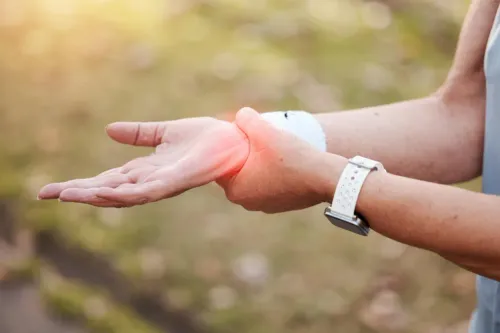



Finding a new lump on the hand or wrist can understandably raise concern. Many hand swellings are benign, but appearance alone cannot reliably identify what a lump represents.
People seeking hand tumors and swelling treatment in Bangalore benefit from evaluation that considers the location, consistency, growth pattern, symptoms, and relationship of the swelling to nearby structures.
Not Every Hand Lump Is a Tumor
The word tumor refers broadly to an abnormal growth and does not automatically mean cancer.
Hand lumps can arise from different tissues, including
- Skin
- Tendon sheaths
- Joints
- Bone
- Fat
- Nerves
- Blood vessels
- Other soft tissues
Ganglion cysts are one familiar cause of wrist or hand swelling, but they are not the only possibility.
What Details Matter?
When evaluating a lump, several characteristics provide useful information.
Consider whether the swelling
- Appeared suddenly or gradually
- Is increasing in size
- Is painful
- Feels firm or soft
- Moves beneath the skin
- Changes with hand movement
- Causes tingling
- Restricts movement
- Has changed the overlying skin
- Returned after previous treatment
The duration of the swelling is also relevant.
When Should a Lump Be Assessed?
A persistent unexplained lump deserves medical assessment, particularly when it is enlarging or affecting hand function.
Evaluation becomes especially important when there is
- Progressive growth
- Persistent pain
- Numbness
- Reduced finger movement
- Recurrent swelling
- Unexplained bone-related swelling
- Significant functional limitation
- Skin changes over the lump
A painless lump can still warrant assessment if it persists or grows.
How Is the Cause Identified?
Clinical examination can provide information about the likely tissue involved.
Depending on the findings, imaging may be recommended. X-rays can help evaluate bone involvement, while ultrasound or MRI may be considered for selected soft-tissue swellings.
In some situations, tissue sampling or removal may be necessary to establish the diagnosis.
The investigation pathway depends on what the swelling looks and feels like clinically.
Should Every Lump Be Removed?
Not necessarily.
Some benign swellings that cause no significant symptoms may be observed. Others may need treatment because they are painful, interfere with movement, compress nearby structures, continue to grow, or require a definite diagnosis.
When surgery is considered, the relationship between the lump and surrounding nerves, tendons, vessels, joints, or bones becomes important.
Simply removing a visible swelling without understanding its origin is not appropriate management.
What About Recurrent Swelling?
A lump that returns after aspiration or previous surgery should be reassessed.
Recurrence does not automatically indicate something dangerous, but it may provide information about the underlying condition and influence the next treatment decision.
Patients should mention any previous procedures and, where available, bring earlier imaging or pathology reports.
Specialist Evaluation Can Clarify the Next Step
Hand tumors and swellings can vary from common benign conditions to less frequent problems requiring more detailed investigation.
For patients in Bangalore, Karnataka, an assessment can help determine whether observation, imaging, biopsy, surgical removal, or another approach is appropriate.
Dr. Kishan Rao evaluates hand and upper-limb swellings with attention to the tissue involved and the effect on surrounding structures.
The presence of a hand lump should not lead automatically to assumptions about its cause. A structured assessment provides a clearer answer about what the swelling may represent and whether treatment is required.