A wrist injury after a fall, sports impact, or repeated hand use is not always a simple sprain. By the end, you will know which injuries fit different mechanisms, how their symptoms differ, what to do during the first 24 hours, and when normal movement still requires imaging or urgent care.
Key takeaways
- Movement does not rule out a wrist fracture after a fall.
- Ice, elevation, and temporary immobilisation can protect an injured wrist.
- Repetitive gripping, typing, and racquet sports can overload wrist tissues.
- Seek specialist assessment for deformity, numbness, severe swelling, or persistent pain.
What injuries can a fall cause in the wrist?
Falling onto an outstretched hand or landing directly on the wrist can cause a fracture, sprain, ligament injury, tendon injury, or dislocation. You may still move the wrist after a break, so movement does not rule one out.
- Distal radius fracture: This may be nondisplaced, extend into the wrist joint, or cause median-nerve tingling and numbness without an obvious deformity.
- Scaphoid fracture: Tenderness in the anatomical snuffbox or over the scaphoid tubercle is important because the bone has a vulnerable blood supply. An early X-ray can look normal, so persistent pain needs immobilization and repeat imaging, MRI, or CT rather than automatic reassurance.
- Hook of hamate fracture: Firm gripping during golf, baseball, tennis, racquet sports, or bat impact can cause pain on the little-finger side of the palm. Routine wrist X-rays can miss it.
- Wrist sprain, ligament injury, or tendon injury: A fall, forceful rotation, repeated loading, or direct impact can damage soft tissues. Gymnastics, weight training, and contact or fall-heavy sports create these stresses.
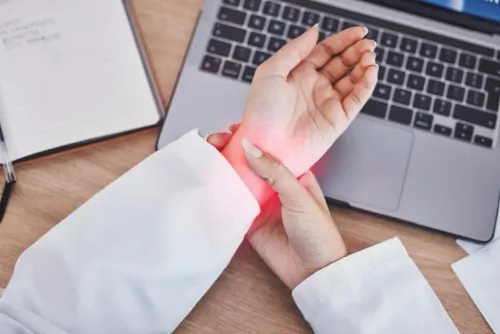
- TFCC injury: Ulnar-sided pain, clicking, weakness, or painful rotation after a fall, twist, or racket or bat activity suggests injury to the triangular fibrocartilage complex.
- Perilunate dislocation: This uncommon injury can compress the median nerve and needs urgent reduction, not routine sprain care. Seek urgent assessment for deformity, numbness, pale or cold fingers, or inability to move them.
Which sports and repeated movements overload the wrist?
Mechanism changes the likely injury. A fall onto an outstretched hand can injure bone or major ligaments, while racket impact or bat impact can cause a hook-of-hamate or TFCC problem. Wrist twisting strains ligaments or the distal radioulnar joint; repeated gripping and loading irritates tendons.
| Activity or pattern | Main wrist load | Problems to consider |
|---|---|---|
| Typing and mouse use | Sustained awkward position, low-force repetition, poor recovery | Aching, stiffness, tendon irritation, or carpal tunnel syndrome |
| Lifting, weight training, gymnastics | Gripping, extension, compression, forceful repetition | Tendon overload, sprain, TFCC injury, or fracture after a fall |
| Racquet sports and manual tools | Impact, gripping, vibration, and wrist twisting | Hook-of-hamate injury, TFCC or ligament injury, and tendon pain |
Forceful repetition overloads tissue through intensity; poor recovery prevents repair between sessions. A neutral wrist with regular breaks is different from holding the wrist bent for hours, even when the movement feels light.
De Quervain tenosynovitis causes thumb-side pain after grasping, lifting, or repeated thumb motion. Intersection syndrome causes pain higher on the back of the forearm, several centimetres above the wrist, with crepitus or swelling.
Carpal tunnel syndrome compresses the median nerve, causing night tingling or numbness in the thumb, index, middle, and thumb-side ring finger, plus weakness or dropped objects. A ganglion cyst is an activity-sensitive lump; do not puncture or burst it at home.
How can you tell a fracture from a sprain, tendon problem, or nerve compression?
A fracture is more concerning when pain is sharply localised over a bone after a fall or impact, especially with swelling, bruising, pain when loading the hand, or deformity. You can still move a fractured wrist, so movement does not rule it out.
- Fracture symptoms: focal bone tenderness, including directly over the scaphoid, are more concerning than diffuse soreness. Severe pain or visible deformity strengthens the concern, but a nondisplaced fracture can look mild.
- Wrist sprain symptoms: pain around the joint, swelling, and pain in a particular direction or under a specific load fit a sprain or ligament injury more closely. These patterns guide assessment; they cannot reliably exclude a fracture, ligament tear, or dislocation.
- TFCC injury: pain on the little-finger side of the wrist, clicking, and weak or painful rotation point toward the triangular fibrocartilage complex, especially after a fall, forceful twisting, or racket activity.
- Tendon injury symptoms: pain follows a tendon and increases during resisted movement. De Quervain disease causes pain with resisted thumb motion, grasping, or lifting; overuse inflammation builds with repeated activity and eases with rest.
- Nerve compression: tingling, numbness, burning, night symptoms, weakness, or dropped objects suggest nerve involvement rather than isolated tenderness. Numbness in the thumb, index, middle, or thumb-side ring finger points toward median-nerve compression.
Persistent focal pain after normal X-rays needs reassessment. Under American College of Radiology guidance, repeat radiographs, MRI without contrast, or CT without contrast may be appropriate. Seek clinical review for persistent tenderness, weakness, or worsening symptoms.
What should you do during the first 24 hours?
During the first 24 hours after wrist injury, protect the hand and arrange assessment if warning signs appear. Do not keep testing it because the fingers still move; a fracture or dislocation can remain mobile.
1. Remove rings and watches before swelling increases. Stop sport, lifting, gripping, and repeated wrist testing.
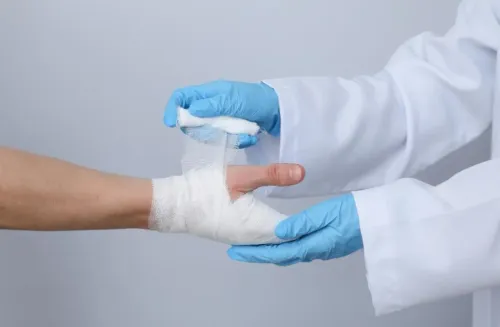
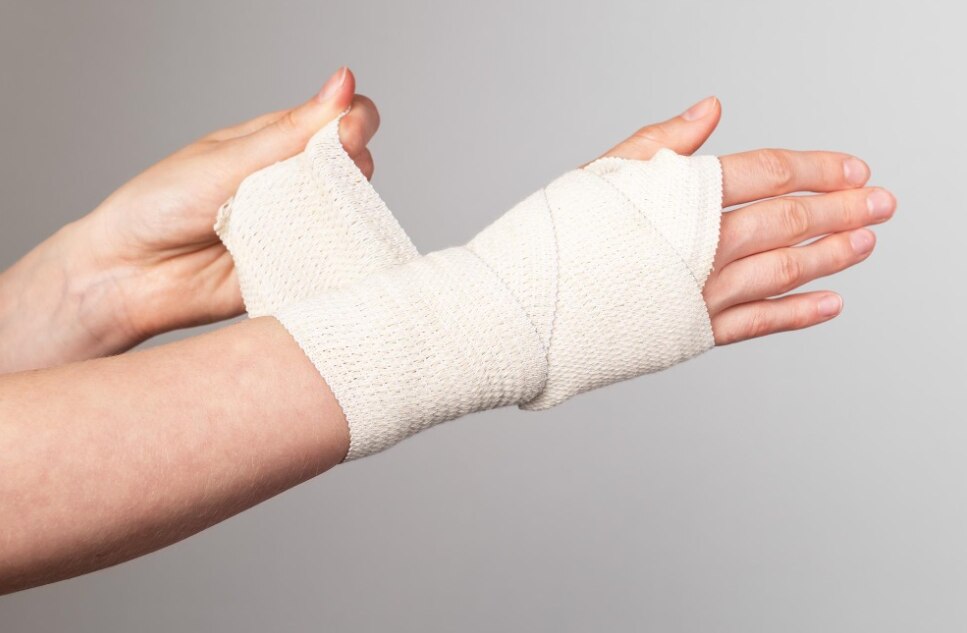
2. Support the wrist in the position found. Use a splint, padded cardboard, or folded clothing; keep the fingers visible so you can check colour, warmth, sensation, and movement. Do not straighten a deformity.
3. Apply a wrapped cold pack for short periods, with cloth between the pack and skin. Avoid massage and heat. Do not tightly wrap a swollen wrist, because pressure can worsen circulation.
4. Seek same-day assessment for visible deformity, an open wound, severe swelling, uncontrolled bleeding, numbness, blue, pale, or cold fingers, inability to move the wrist or fingers, or severe pain directly over the scaphoid.
5. For safe wrist immobilisation while travelling, support the forearm, keep the wrist neutral, and avoid pressure on the injured area. Do not drive if pain or restricted movement affects control; have someone take you or use emergency transport.
6. Do not fast routinely. Avoid eating or drinking only when a clinician or emergency service says urgent treatment requiring fasting is being considered.
When does wrist pain need specialist assessment?
Same-day care is necessary for neurovascular changes, an open injury, deformity, uncontrolled bleeding, inability to move the fingers, severe swelling, or suspected perilunate dislocation. A cold, pale, blue, or newly numb hand can signal compromised circulation or nerve pressure; a perilunate dislocation can compress the median nerve.
| Urgency | Warning signs | What to do |
|---|---|---|
| Same day | Cold, pale, blue, or numb fingers; uncontrolled bleeding; open wound; deformity; severe swelling; inability to move the fingers | Attend emergency care and keep the wrist supported |
| Prompt review | Scaphoid tenderness; persistent wrist pain after normal X-ray; ongoing numbness or weakness; pain that continues after a short period of protection | Arrange assessment by a hand and wrist specialist |
| Prompt review | Ulnar-sided clicking, painful rotation, or instability after a fall, forceful twisting, or racket or bat activity | Request a TFCC injury assessment |
Knowing when to see a hand and wrist specialist matters because pain location alone cannot exclude a hidden fracture or unstable ligament injury. Examination can include scaphoid tenderness assessment, distal radioulnar-joint stability, tendon function, sensation, and circulation before the clinician selects repeat X-rays, CT, or MRI.
Dr.Kishan Rao in Bangalore is a specialist hand and wrist surgeon who can evaluate unresolved trauma, sports injuries, nerve symptoms, and repetitive-use conditions, helping match the problem with an appropriate assessment rather than assuming it is a simple sprain.
Related services
Hand & Wrist fracture Management Hand & Wrist fracture Management Hand and wrist fractures are common injuries that can result from trauma, such as a fall or direct blow to the hand or wrist. View service → |
Hand/Wrist Arthroscopy Hand arthroscopy is a minimally invasive surgical procedure used to diagnose and treat various conditions of the hand and wrist. View service → |
Frequently asked questions
What injuries can a fall cause in the wrist?
A fall onto an outstretched hand or direct impact can cause a fracture, sprain, ligament injury, tendon injury, or dislocation. You can still move the wrist after a fracture.
Which sports and repeated movements overload the wrist?
Racquet sports, weightlifting, gymnastics, cricket, and activities involving repeated gripping, twisting, typing, or mouse use can overload wrist joints, tendons, and nerves.
How can you tell a fracture from a sprain, tendon problem, or nerve compression?
A fracture often causes focal tenderness, swelling, bruising, or pain after impact. Sprains affect ligaments, tendon problems hurt with specific movements, and nerve compression can cause tingling, numbness, or weakness. Only an examination and appropriate imaging can confirm the diagnosis.
What should you do during the first 24 hours?
Rest the wrist, remove rings, apply a wrapped ice pack for 15 to 20 minutes at a time, keep the hand elevated, and use a temporary splint without tightening it. Seek urgent care for deformity, open wounds, severe pain, blue or cold fingers, or numbness.
When does wrist pain need specialist assessment?
Arrange assessment after a fall when pain, swelling, tenderness, or reduced movement persists, even if you can move the wrist. Seek urgent care for deformity, severe swelling, numbness, loss of grip, or changes in finger colour or temperature.