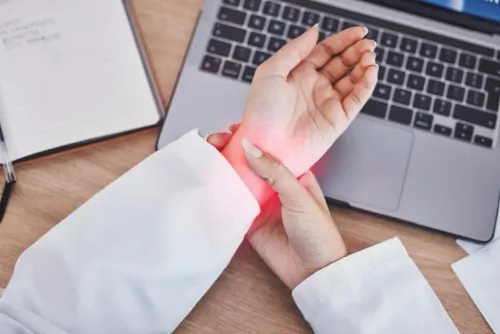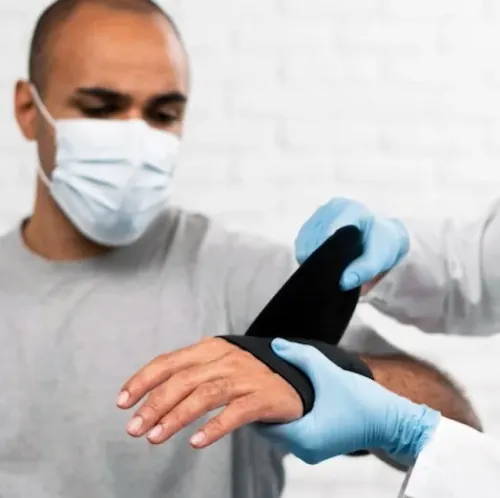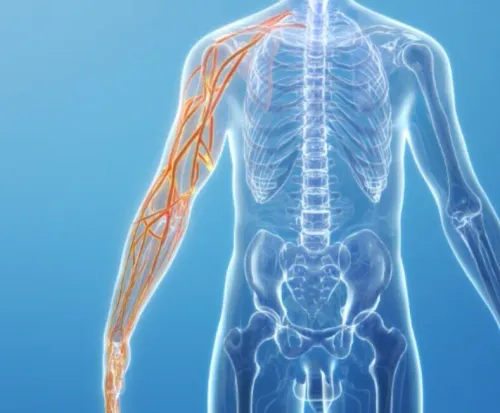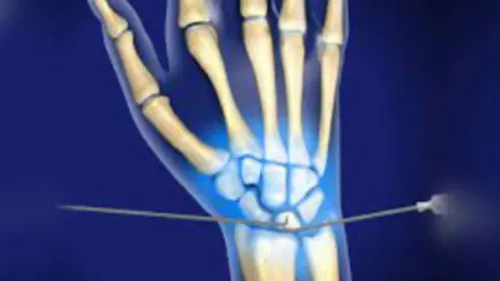
After an accident, a hand can have serious damage even when the skin looks intact or the fingers still move. You will be able to sort emergency warning signs from same-day concerns, protect the injury safely, and recognise when persistent symptoms need specialist assessment.
Key takeaways
- Go to emergency care for numbness, loss of movement, severe bleeding, or abnormal alignment.
- Do not straighten a deformed finger or push exposed bone beneath the skin.
- Remove rings, cover open wounds, and keep the hand still while seeking care.
- Book specialist review for persistent pain, weakness, stiffness, or reduced sensation.
Go to the emergency department for these warning signs
A hand injury needs emergency-department assessment now when circulation, sensation, movement, or alignment is seriously affected. Do not wait for swelling to settle, and do not try to straighten the finger or push exposed bone back under the skin.
| Sign or symptom | Why it matters | What to do |
|---|---|---|
| Visible deformity, dislocation, or a finger held at an abnormal angle | A displaced fracture or joint injury may be present | Keep it still and go to the emergency department |
| Open wound or exposed bone | This may be an open fracture with a high infection risk | Cover it loosely and seek emergency care |
| Pale, blue, unusually cold, numb, or increasingly painful finger | Swelling, a tight ring, or vessel damage may be reducing blood flow | Remove rings if possible and go immediately |
| Inability to move a finger, loss of grip, or absent feeling | A serious nerve, tendon, or bone injury may have occurred | Do not repeatedly test it; get emergency assessment |
| Severe or rapidly worsening pain, tight swelling, or pain when fingers are gently stretched | This pattern can indicate acute compartment syndrome, a surgical emergency | Go immediately, even if the skin looks normal |
| Uncontrolled bleeding or rapidly increasing bruising and swelling | The wound or deeper injury needs prompt control and examination | Apply firm pressure around the wound and seek emergency care |
A finger that rotates or crosses a neighbouring finger when you gently close your hand also needs urgent assessment. A ring that cannot come off while the finger turns blue, numb, or very swollen may need cutting to protect circulation.
What to do while arranging urgent medical care
Call emergency services or arrange immediate transport if bleeding remains uncontrolled, the hand is deformed, bone is visible, or a finger is pale, blue, cold, numb, or held at an abnormal angle. Do not drive yourself if you feel faint or the injury is severe.
1. Press a clean dressing or cloth firmly over the bleeding site. Keep steady pressure for 10 minutes without lifting it to check. If blood soaks through, add another layer; do not remove the first one. If an object is stuck in the wound, press around it rather than pulling it out.
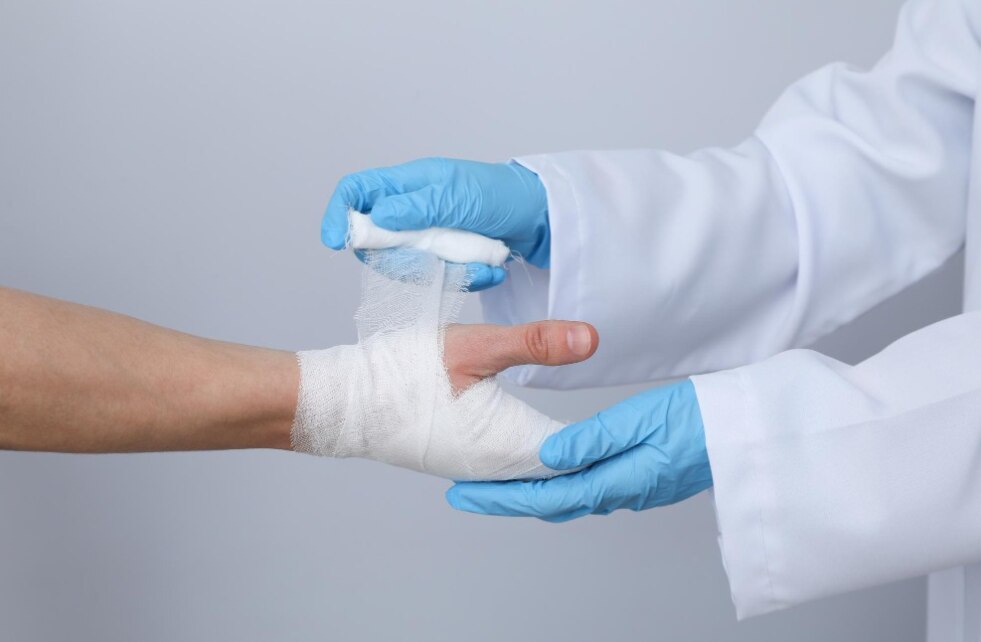
2. Cover an open wound with sterile gauze or the cleanest available cloth. Do not push exposed bone back under the skin, rinse a deep wound aggressively, or close a bite or puncture with tape.
3. Remove rings, watches, and tight bracelets immediately. Swelling can turn a ring into a constricting band; if it will not come off and the finger becomes blue, numb, increasingly painful, or more swollen, get urgent help to cut it off.
4. Keep the hand still and support the hand on a folded towel, sling, or cushion. Do not straighten a bent finger, massage the injury, or repeatedly test movement or grip.
5. Apply a cold pack wrapped in cloth for 15 to 20 minutes at a time. Keep it off broken skin, and avoid food or drink when urgent surgery could be needed.
What the symptoms can reveal about the damaged structure
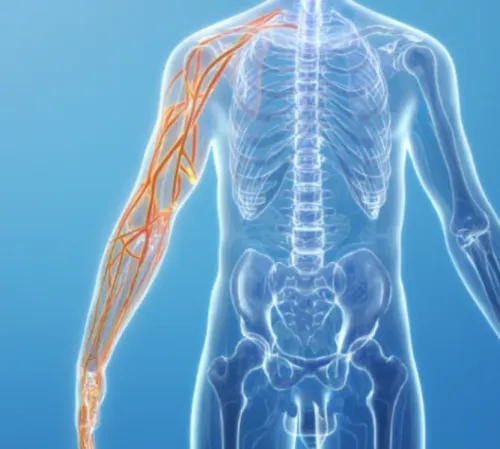
The pattern of pain, movement loss, and skin change helps identify what the accident damaged. A blood-vessel problem affects circulation; a nerve injury changes sensation or muscle control; a tendon, ligament, joint, or bone injury changes movement, stability, or shape.
| Structure | Warning signs | What it can indicate |
|---|---|---|
| Blood vessel | Pale, blue, or unusually cold fingers; absent or markedly reduced feeling | Compromised blood flow requiring emergency assessment |
| Nerve | Numbness or tingling in the thumb, index, middle, and thumb-side of the ring finger | Median-nerve compression or injury |
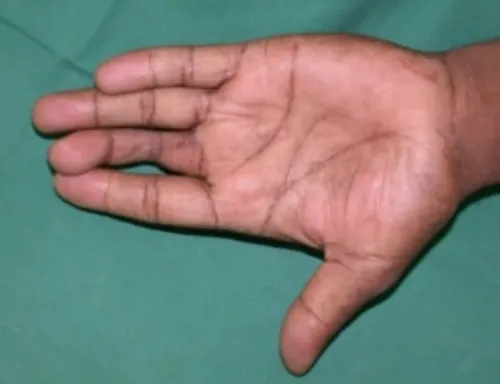
| Nerve | Numbness or tingling in the little and ring fingers; weak pinch or loss of grip | Ulnar-nerve injury |
| Tendon | Inability to actively bend a finger at one or more joints | A cut or flexor tendon injury; a fingertip that will not bend can indicate flexor tendon injury or jersey finger |
| Ligament or joint | Instability, painful clicking, or reduced forearm rotation after twisting | Ligament damage, triangular fibrocartilage complex injury, or distal radioulnar-joint injury |
| Bone | Deformity, abnormal angle, severe swelling, or inability to move the finger | Fracture or dislocation; exposed bone or a wound over the injury signals an open fracture |
A deep cut can sever a flexor tendon even when some movement remains. New or worsening numbness, tingling, inability to move, or a cold or discoloured finger is not a symptom to monitor at home; seek emergency evaluation. Do not repeatedly test the movement, because that can extend the damage.
When a hand injury looks minor but still needs assessment
Pain that remains focal, weak, or stiff after several days deserves reassessment, even if the hand looks straight and the first X-ray was normal. Early swelling can hide a small fracture, tendon tear, ligament disruption, or joint injury.
| Finding | What it may indicate | Action |
|---|---|---|
| Snuffbox tenderness, thumb-side wrist pain, or pain with gripping after a fall | An occult scaphoid fracture, which can be invisible on the first X-ray | Keep the wrist protected and arrange prompt review; repeat imaging, MRI, or CT may be needed |
| Inability to bend a finger fully, or reduced flexion against resistance after a deep cut | Flexor tendon damage, even if the finger still moves slightly | Seek same-day hand assessment because delayed repair becomes more difficult |
| Little-finger-side wrist pain, painful clicking, reduced forearm rotation, or a feeling of instability | A TFCC injury or distal radioulnar-joint injury rather than a simple sprain | Arrange prompt assessment if symptoms persist after a fall or twisting injury |
| Redness, warmth, drainage, fever, or pain that is worsening around a puncture or bite | Infection spreading into a tendon sheath, joint, or deep hand space | Obtain same-day medical care; do not close a human or animal bite at home |
| Rapidly increasing bruising, swelling, or loss of function after initial improvement | Bleeding, an occult fracture, or another complication | Seek urgent reassessment rather than repeatedly testing movement |
Book specialist review when pain, swelling, weakness, stiffness, or difficulty with normal tasks continues beyond several days or worsens. A hand examination can identify injuries that appearance and an early radiograph miss.
When to book specialist review after the first assessment
Arrange a routine hand and wrist specialist appointment when pain, swelling, or movement does not steadily improve after the first assessment. Persistent pain or swelling on the little-finger side, painful clicking, reduced forearm rotation, or wrist instability deserves review for TFCC or distal radioulnar-joint injury.
Book review as well for thumb-side wrist tenderness after a fall, pain with gripping, incomplete finger straightening, a drooping fingertip, or ongoing numbness. A normal first X-ray does not exclude an occult scaphoid fracture, and a missed tendon damage can become harder to repair.
Delay can allow a fracture to heal in malunion and cause lasting loss of function. Dr.Kishan Rao can assess whether you need repeat X-rays, MRI, CT, immobilisation, or a tendon and ligament examination.
Return to urgent care the same day if symptoms are worsening rather than settling:
- Increasing pain, swelling, bruising, redness, warmth, drainage, or fever, especially after a bite or puncture.
- New or spreading numbness or tingling, weaker grip, inability to move a finger, or failure to straighten it.
- A finger or hand becoming pale, blue, cold, or increasingly tight.
- A new deformity, abnormal angle, or suspected dislocation; do not try to straighten it.
- A wound opening over a suspected fracture, exposed bone, or bleeding that will not stop with firm pressure.
Go to an emergency department for rapidly developing circulation or nerve changes, exposed bone, uncontrolled bleeding, or severe deformity.
Related services
Hand & Wrist fracture Management Hand & Wrist fracture Management Hand and wrist fractures are common injuries that can result from trauma, such as a fall or direct blow to the hand or wrist. View service → |
Surgery Consultation ₹700 During a hand surgery consultation, you will meet with a hand surgery specialist to discuss your hand condition and potential treatment options. View service → |
Frequently asked questions
Which hand injury warning signs require emergency-department care?
Seek emergency care for seriously reduced circulation, numbness or loss of sensation, inability to move the hand or fingers, severe bleeding, exposed bone, or obvious deformity.
What should you do while arranging urgent care for a hand injury?
Keep the hand still, cover open wounds with a clean dressing, remove rings before swelling increases, and do not straighten a deformed finger or push exposed bone under the skin.
What can hand injury symptoms reveal about the damaged structure?
Numbness can indicate nerve injury, pale or blue skin can indicate impaired circulation, loss of movement can involve tendons or bones, and deformity can indicate a fracture or dislocation.
When should you seek specialist review after the first assessment?
Book specialist review when pain, weakness, stiffness, reduced sensation, swelling, or restricted movement persists after the initial assessment or treatment.