Pain on the little-finger side of the wrist, a painful click during rotation, or a weaker grip can point to TFCC trouble, but those signs also occur with several other wrist conditions. You will learn which movements matter, which warning signs need prompt assessment, how clinicians confirm the source, and what recovery actually requires.
Key takeaways
- Little-finger-side pain with rotation or gripping can indicate a TFCC problem.
- Clicking, weak grip, and pain during weight-bearing are important warning signs.
- MRI, X-rays, and specific wrist tests help identify the pain source.
- Treatment may involve splinting, therapy, injections, or surgery based on the injury.
Which wrist symptoms point toward a TFCC problem?
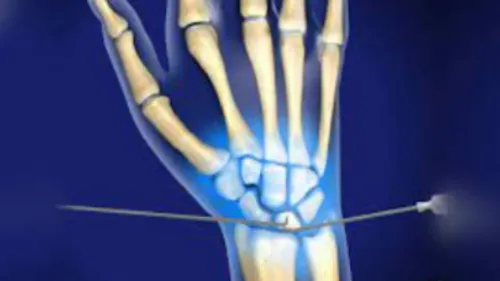
A TFCC problem becomes more likely when pain sits on the little-finger side of the wrist and worsens with gripping, forearm rotation, or weight-bearing. The TFCC anatomy includes the articular disc, dorsal radioulnar ligament, volar radioulnar ligamentation, meniscus homologue, and ulnar supporting structures between the distal ulna, carpus, and distal radioulnar joint.
Look for this pattern:
- Painful clicking or catching, especially with palm-up or palm-down rotation
- Reduced grip strength because loading the wrist hurts
- Swelling and tenderness beside the ulnar head
- Pain when turning a doorknob, using a screwdriver, opening a jar, or lifting a pan
- Symptoms during racquet sports or manual work
These movements combine axial loading with rotation. The TFCC bears load and stabilizes the wrist while the forearm turns, so pushing up from a chair, gripping a tool, or twisting a jar can compress and shear an injured area.
| Finding | What it suggests | Important limit |
|---|---|---|
| Painful click with loading or rotation | TFCC irritation or mechanical injury deserves assessment | It does not prove a tear |
| Occasional painless click | Less concerning by itself | Monitor for pain, swelling, or weakness |
| Clicking without pain | Nonspecific wrist movement | Cannot confirm a TFCC tear |
A painful click matters more than a silent one, but clicking alone cannot establish the diagnosis. Examination must match the pain location, tenderness, strength change, and provoking movement.
What type of TFCC injury could cause these signs?
A traumatic TFCC tear follows a fall on an outstretched hand or a sudden twist. Degenerative TFCC wear develops with age, repetitive loading, or ulnar-positive wrist anatomy, where a relatively long ulna increases load across the ulnocarpal joint. A central TFCC tear often involves the disc and causes pain without major instability.
A peripheral TFCC tear, especially a foveal tear, can disrupt distal radioulnar joint stability, creating a shifting or loose-ulna sensation during forearm rotation.
| Condition | Clues that separate it |
|---|---|
| TFCC injury | Little-finger-side pain, painful clicking, weak grip, and pain with palm-up or palm-down rotation or loading |
| De Quervain tenosynovitis | Pain at the thumb-side wrist, worsened by thumb movement or grasping |
| Wrist sprain | Soft-tissue pain and swelling after injury without the specific ulnar-sided pattern |
| Distal radius fracture | Fall-related tenderness near the forearm end, swelling, deformity, or pain with wrist movement |
| Ulnar impaction syndrome | Ulnar-sided loading pain linked to a relatively long ulna; it can cause degenerative TFCC damage |
| Extensor carpi ulnaris tendon disease | Pain along the tendon on the back-little-finger side, sometimes with snapping |
| Pisotriquetral arthritis | Localized pain at the palm-side wrist near the pisiform |
| Occult fracture | Persistent focal tenderness despite normal initial X-rays |
Seek urgent assessment for deformity, severe swelling, numbness, a cold or discolored hand, inability to rotate the forearm, or sudden grip loss.
- Stop painful loading and stop testing the click or grip.
- Remove rings if swelling develops.
- Apply cold briefly through a cloth barrier.
How do clinicians confirm whether the TFCC is the pain source?
Home diagnosis is unreliable because pain-provoking maneuvers stress several wrist structures, and guarding can make an unstable joint feel stable. A clinician interprets the fovea sign, press test, piano-key test, DRUJ ballottement test, grind test, ulnar-deviation pain, and rotation testing by comparing both wrists and considering other causes of ulnar-sided pain.
A positive press test, for example, supports TFCC pathology but does not prove a tear.
The assessment combines:
- Your injury mechanism, timing, clicking, weakness, and painful activities
- Ulnar-fovea palpation for localized tenderness
- Distal radioulnar joint stability testing in pronation, supination, and neutral
- Grip-strength comparison with the opposite hand
- Examination of the elbow, shoulder, and neck to identify referred pain or another source
| Test | Question it answers |
|---|---|
| X-rays | Is there a fracture, poor alignment, arthritis, abnormal distal radioulnar joint position, or positive ulnar variance? |
| MRI or MR arthrography | Is there soft-tissue injury, including a TFCC tear? |
| Arthroscopy | Is direct inspection and treatment needed during the same procedure? |
A normal X-ray does not exclude a TFCC tear because standard radiographs do not show the TFCC adequately. MRI abnormalities must match the painful side, symptoms, and examination; age-related TFCC signal changes can be incidental.
What treatment and recovery path follows a confirmed TFCC injury?
For a stable, non-displaced injury, TFCC conservative treatment usually starts with a defined trial of nonoperative care:
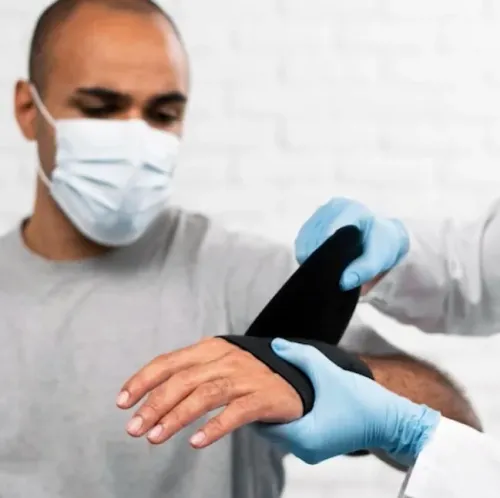
- Stop painful loading and wear a wrist brace or forearm splint that limits rotation.
- Avoid heavy gripping, pushing up from chairs, lifting pans, driving, and repeated screwdriver movements.
- Attend supervised hand therapy, then rebuild grip strength and forearm rotation in stages.
- Use pain medicine or an injection only as directed by a clinician.
The brace reduces stress while the tissue settles; testing the painful click repeatedly can prolong irritation. Your clinician sets lifting and rotation limits, then clears a staged return to work, racquet sports, or manual tasks when motion, strength, and stability improve.
Surgery enters the discussion when pain persists after appropriate care, a traumatic peripheral tear is repairable, or examination confirms distal radioulnar joint instability. A shifting ulna or loose feeling during palm-up and palm-down rotation deserves reassessment rather than indefinite self-treatment.
| Procedure | What it does | Recovery implication |
|---|---|---|
| Arthroscopic debridement | Removes unstable damaged tissue, often from a central tear | Usually less immobilization than repair, but therapy remains necessary |
| TFCC repair or foveal reinsertion | Restores torn peripheral or foveal tissue and stability | Usually requires longer immobilization and rehabilitation |
After surgery, splinting, lifting restrictions, and limits on forearm rotation are expected. Risks include infection, nerve irritation, stiffness, persistent pain, incomplete relief, and temporary limits on driving and work.
What should you ask before choosing treatment for a TFCC injury?
Before choosing treatment, ask what the scan and examination actually prove, not merely whether an MRI mentions a tear.
- Where is the tear: central, peripheral, or foveal?
- Is the distal radioulnar joint stable in neutral, pronation, and supination?
- What does the ulnar variance measurement show, and could ulnar impaction be adding load?
- Does imaging match the painful side, tender location, movement pattern, and examination?
- What nonoperative alternatives fit this injury, and how long should you try them?
- How long will you wear the brace, and what immobilization would surgery require?
- How often will therapy occur, and when will grip and forearm rotation progress?
- Which medication or injection choices are appropriate for you?
- What are the work, driving, lifting, and sport-specific restrictions?
- Which signs—persistent pain, shifting of the ulna, worsening weakness, or failed healing—would change the plan?
Compare the practical burden, not just the procedure name.
| Option | Effort and cost | Time and restrictions |
|---|---|---|
| Observation | Least expense; requires activity changes | Review if symptoms persist |
| Brace | Brace cost and daily compliance | Limits rotation and lifting during the trial |
| Imaging | Scan expense and appointment time | Clarifies competing diagnoses; does not guarantee the pain source |
| Therapy | Repeated visits and home exercises | Gradual return of strength and motion |
| Debridement | Procedure and surgical risks | Usually less rehabilitation than repair |
| Repair | Surgery, immobilization, and longer therapy | More missed work, driving limits, and delayed lifting |
TFCC treatment questions are worth reviewing with Dr.Kishan Rao when symptoms persist, the diagnosis is uncertain, or distal radioulnar joint instability makes surgery difficult to assess.
Related services
Hand/Wrist Arthroscopy Hand arthroscopy is a minimally invasive surgical procedure used to diagnose and treat various conditions of the hand and wrist. View service → |
Surgery Consultation ₹700 During a hand surgery consultation, you will meet with a hand surgery specialist to discuss your hand condition and potential treatment options. View service → |
Frequently asked questions
Which wrist symptoms point toward a TFCC problem?
Pain on the little-finger side of the wrist, clicking, weak grip, and pain during forearm rotation or weight-bearing point toward a possible TFCC problem.
What type of TFCC injury could cause these signs?
The cause may be a traumatic tear, a degenerative tear from repeated loading, or damage linked to distal radioulnar joint instability or ulnar-sided wrist anatomy.
How do clinicians confirm whether the TFCC is the pain source?
Clinicians combine your injury history with an examination, wrist X-rays, targeted tests, and MRI when the diagnosis or extent of damage remains uncertain.
What treatment and recovery path follows a confirmed TFCC injury?
Treatment depends on tear type and joint stability and may include activity changes, immobilisation, hand therapy, medication, injection, or arthroscopic surgery.
What should you ask before choosing treatment for a TFCC injury?
Ask which structure is injured, whether the distal radioulnar joint is stable, what non-surgical care involves, how recovery will be measured, and when surgery is necessary.