Weakness that starts in the neck or shoulder and extends into the arm or hand can reflect an injury to the brachial plexus, not only a joint or muscle problem. By the end, you will be able to recognise the movement and sensation patterns, understand what different injury levels suggest, and identify signs that need emergency assessment.
Key takeaways
- Weakness, numbness, or pain can affect only specific arm and hand nerve territories.
- An injury near the neck differs from one near the shoulder or upper arm.
- The injury mechanism can help identify which brachial plexus nerves were damaged.
- Strength testing, sensation checks, imaging, and electrodiagnostic tests guide recovery estimates.
What the brachial plexus controls in your arm and hand
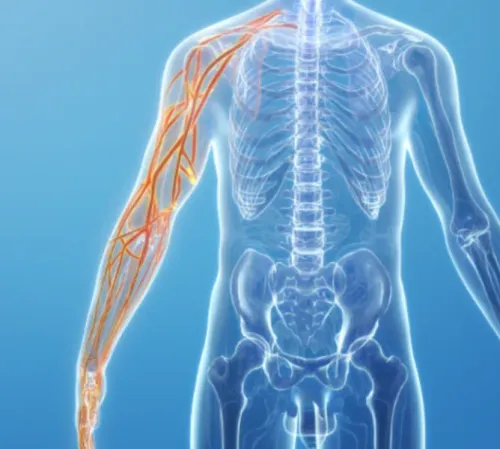
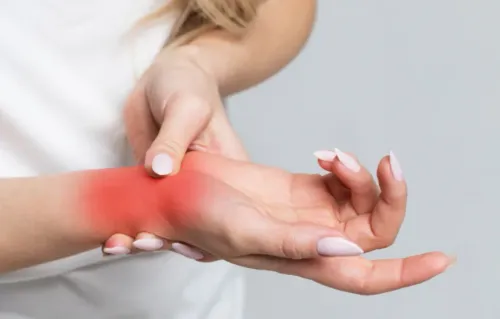
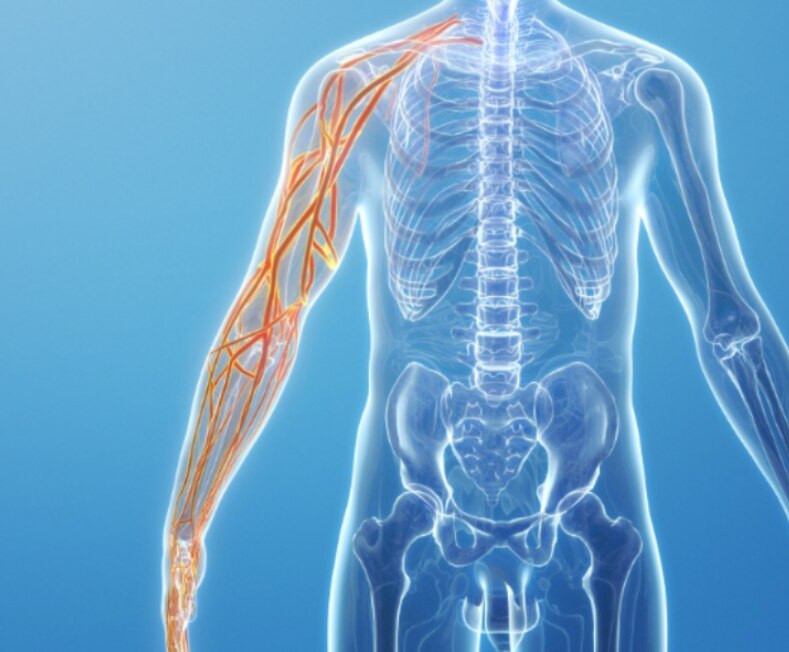
The brachial plexus is a network of nerves running from the neck through the shoulder and into the arm and hand. It carries signals that move muscles and transmit sensation. Damage can cause weakness, paralysis, pain, numbness, or tingling in one or more nerve territories, even when your hand is not completely numb.
| Area or nerve pathway | Movement problem | What you may notice |
|---|---|---|
| Upper plexus | Shoulder weakness | Inability to lift the arm or move it away from your body |
| Musculocutaneous nerve | Weak elbow bending | Trouble bringing your hand toward your shoulder |
| Radial nerve | Weak elbow straightening or wrist extension | Wrist drop and difficulty raising the back of the hand |
| Median or ulnar pathways | Weak grip or finger control | Difficulty opening the hand, pinching, or coordinating fingers |
| Lower plexus | Hand and finger weakness | Reduced grip, clumsy finger movement, or paralysis in part of the hand |
The exact pattern depends on whether the injury affects nerve roots, trunks, cords, or terminal nerves, and whether the nerves were stretched, compressed, or torn. Weakness extending beyond the shoulder points toward the plexus or one of its branches rather than a shoulder-joint problem alone.
A careful examination compares shoulder movement, elbow bending and straightening, wrist and finger motion, grip strength, reflexes, and sensation.
How the injured nerve level changes the symptom pattern
The injured level predicts which muscle groups fail: an upper lesion disrupts shoulder and elbow control, while a lower lesion reaches the muscles that position the wrist, fingers, and thumb. A single terminal-nerve injury creates a narrower pattern.
| Level or nerve | Movement pattern | Clues that help localise it |
|---|---|---|
| Upper trunk C5–C6 | Weak shoulder abduction and external rotation, elbow flexion, and forearm supination | The arm may hang close to the body with the palm facing backward or downward. Wrist and finger movement can remain relatively strong. |
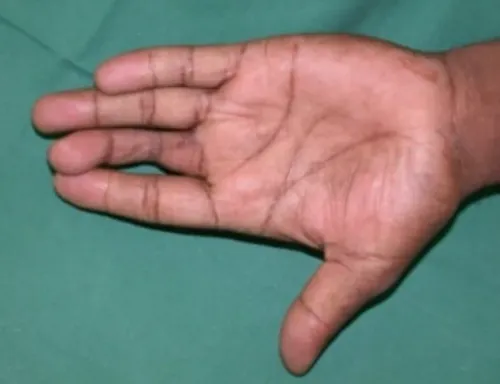
| Lower trunk C8–T1 | Weak grip, poor finger coordination, and difficulty with fine tasks such as fastening buttons | Numbness often follows the medial forearm and little-finger side of the hand. The fingers may rest in a claw-like position. |
| Musculocutaneous nerve | Weak elbow bending and forearm supination | Shoulder and hand movements stay stronger because this nerve mainly supplies the biceps, brachialis, and coracobrachialis. |
| Radial nerve | Difficulty straightening the elbow, wrist, thumb, or fingers | The pattern called radial nerve wrist drop occurs when the wrist and finger extensors lose power. |
A traction injury can look like a shoulder problem because raising the arm becomes impossible. Test elbow bending, wrist and finger extension, finger flexion, grip, and sensation: weakness beyond the shoulder joint points toward the plexus or one of its branches rather than only the rotator cuff.
Scapular winging or trouble elevating the arm can reflect long thoracic nerve involvement without proving that the hand muscles are injured. Drooping eyelid, a smaller pupil, and reduced sweating on the same side of the face raise concern for a severe lower plexus or C8–T1 injury.
Pain, numbness, and what the injury mechanism can reveal
The injury mechanism and symptom pattern can suggest whether the plexus was stretched or severely disrupted, but symptoms alone cannot confirm the damage. Numbness, tingling, burning pain, reduced temperature sensation or complete loss of feeling can occur with either type.
| Pattern | What it suggests | Why it matters |
|---|---|---|
| Stretch or compression after a traction injury, with partial weakness and patchy sensory change | A less severe plexus injury | Nerves may remain connected, allowing strength and sensation to improve as swelling settles. |
| A high-energy crash, fall, shoulder dislocation, or force that pulls the head away from the shoulder, followed by a flail or nearly flail arm | Root avulsion or another severe proximal injury | The nerve roots may have been torn from the spinal cord, causing profound weakness, sensory loss, and persistent neuropathic pain. |
| Drooping eyelid, a smaller pupil, and reduced sweating on one side of the face | Severe lower plexus or C8–T1 root injury | Horner syndrome indicates nearby sympathetic nerve damage, not an isolated hand-nerve problem. |
Severe electric or shooting pain supports nerve injury, but little or no pain does not make weakness or sensory loss harmless. Seek emergency assessment for a missing pulse, cold or pale hand, rapidly increasing swelling, or pain far greater than the visible injury; arterial damage or compartment syndrome can threaten the limb.
When arm weakness may be something other than a plexus injury
Weakness after a motorcycle crash, fall, traction injury, penetrating wound, or childbirth-related injury does not automatically identify the brachial plexus. The pattern of weakness, pain, sensation, and visible injury provides the first clue.
| Condition | Clues that favour it over a plexus injury |
|---|---|
| Fracture | Focal bone tenderness, swelling, deformity, or pain with gentle movement; weakness may result from pain rather than nerve failure. |
| Dislocated shoulder | A visibly abnormal shoulder contour and inability to move the joint, with pain centred at the shoulder; numbness over the outer shoulder suggests associated axillary-nerve injury. |
| Cervical radiculopathy | Neck pain radiating in a root pattern, worsened by neck movement, with a matching reflex or sensory change rather than several arm nerves affected together. |
| Spinal cord injury | Weakness in both legs or both arms, balance loss, trunk sensory changes, or bladder and bowel problems; neck trauma makes this an emergency. |
| Stroke | Sudden one-sided arm weakness with facial droop, speech trouble, vision loss, confusion, or leg weakness; call emergency services immediately. |
| Compressed peripheral nerve | Symptoms follow one named nerve, such as wrist drop with radial-nerve compression, rather than spanning the shoulder, arm, and hand. |
A plexus injury becomes more likely when weakness crosses several nerve territories, such as impaired shoulder movement plus weak elbow, wrist, finger, or grip function. Loss of a pulse, a cold or pale hand, rapidly increasing swelling, or severe pain out of proportion requires emergency assessment for arterial injury or compartment syndrome.
After trauma, paralysis that is worsening, or any possible spinal cord or stroke sign, needs urgent evaluation rather than observation.
How clinicians confirm the injured territory and judge recovery
A precise map matters more than the word “weak.” The clinician tests muscle strength in shoulder elevation, elbow flexion and extension, wrist and finger movement, then measures grip strength, sensation in named nerve distributions, reflexes, and scapular winging.
- Weakness crossing several peripheral-nerve territories points toward the brachial plexus.
- Neck pain, symptoms following one dermatome, and reflex loss fit a nerve-root problem.
- Weakness and numbness limited to one named nerve, such as the radial, median, or ulnar nerve, suggest an isolated arm-nerve injury.
- Scapular winging or difficulty raising the arm can indicate long thoracic or other proximal-branch involvement; it does not prove that the hand muscles are injured.
Electrodiagnostic testing after 3–4 weeks can show conduction block, axonal loss, and denervation, while helping separate plexus disease from cervical-root or isolated-nerve injury. Testing earlier can underestimate damage, so repeat studies often clarify whether muscles are reinnervating. MRI or CT myelography can assess the plexus and nerve roots, but serial examinations remain essential.
Arrange specialist follow-up promptly after a high-energy injury, persistent paralysis, severe neuropathic pain, a nearly flail arm, or Horner syndrome. Dr.Kishan Rao can help coordinate the detailed hand and upper-extremity assessment needed when weakness extends beyond the shoulder. Recovery over weeks does not exclude serious injury, so do not watch persistent loss of movement indefinitely.
Frequently asked questions
What does the brachial plexus control in the arm and hand?
It carries movement signals to muscles and sensation signals from the shoulder, arm, forearm, and hand.
How does the injured nerve level change symptoms?
Injuries near the neck, shoulder, or lower plexus produce different combinations of weakness, numbness, and pain in the arm and hand.
What can the injury mechanism reveal?
Traction, blunt trauma, penetrating wounds, fractures, and shoulder displacement can point clinicians toward the affected nerve territory.
How do clinicians confirm a brachial plexus injury and assess recovery?
They combine a neurological examination with strength and sensation testing, imaging, and electrodiagnostic studies such as nerve conduction tests and electromyography.