Wrist pain that returns with gripping, rotation, or sport deserves more than a pain-duration guess. The decision to recommend arthroscopy depends on the symptoms, examination findings, imaging, suspected joint problem, and response to appropriate nonsurgical care; by the end, you will know which combinations justify a surgical discussion and which point elsewhere.
Key takeaways
- Repeated flare-ups that limit work, sport, lifting, or hand use need assessment.
- Arthroscopy is considered when imaging identifies a treatable joint problem.
- Try appropriate rest, splinting, therapy, and medication before elective arthroscopy.
- Open surgery or nonoperative care may be better for fractures, arthritis, or nerve symptoms.
What counts as persistent wrist pain that needs further assessment?
There is no universal duration cutoff for persistent wrist pain. Pain does not need to occur every day: repeated flare-ups after work, sport, lifting, or leaning on the hand can justify assessment when they continue, worsen, or limit normal use.
Chronic wrist pain is a reason to investigate the pattern, not an automatic referral for arthroscopy.
Arrange a structured wrist evaluation when you have:
- Wrist clicking, catching, or a sensation that something shifts during movement
- Painful wrist rotation, especially turning a key, opening a jar, or rotating the forearm
- Weak grip, pain when loading the wrist, or difficulty bearing weight through the hand
- Swelling, reduced motion, or tenderness that keeps returning after activity
- Pain on the little-finger side, which can occur with triangular fibrocartilage complex problems
- Pain on the thumb side, particularly after a fall or with suspected ligament injury
- A feeling that the wrist is unstable or gives way
Assessment usually starts with your history, a physical examination, and wrist X-rays. Ultrasound, MRI, MR arthrography, CT, or a diagnostic injection may follow when the examination or X-rays point to a specific problem.
Arthroscopy becomes relevant when symptoms suggest an intra-articular cause, such as a TFCC or ligament injury, but non-invasive tests do not provide a clear answer.
Seek prompt medical care for severe injury, fever, spreading redness, drainage, marked swelling, new numbness, or weakness. These signs can indicate infection, fracture, tendon damage, or nerve and blood-vessel problems that need a different pathway.
Which wrist conditions make arthroscopy a reasonable option?
Wrist arthroscopy indications usually involve a specific, potentially treatable problem inside the joint—not pain duration alone. Common targets include a TFCC tear, scapholunate ligament injury, lunotriquetral ligament injury, loose body, inflamed synovium, early arthritis, or wrist cartilage damage.
Little-finger-side pain with clicking, painful rotation, loading pain, or suspected distal radioulnar-joint instability makes TFCC pathology more relevant; thumb-side pain and instability raise concern for scapholunate injury.
| Assessment | What it contributes | What it cannot establish alone |
|---|---|---|
| Examination | Localises tenderness, tests motion, grip, clicking, instability, and painful rotation | The exact tear or cartilage defect |
| X-rays | Shows fracture, arthritis, alignment, ulnar variance, and joint-space change | Most TFCC and ligament injuries |
| Ultrasound | Assesses selected tendons, superficial structures, fluid, and dynamic movement | Deep intra-articular lesions comprehensively |
| MRI | Evaluates TFCC, intrinsic ligaments, cartilage, bone, and synovium | Small tears can remain unclear; incidental changes can be painless |
| MR arthrography | Uses injected contrast to outline small communicating tears | An abnormal image still needs clinical correlation |
| CT | Defines bone detail, nonunion, alignment, and some instability patterns | Soft-tissue injury as well as MRI |
A diagnostic injection can test whether numbing the radiocarpal or distal radioulnar joint temporarily relieves the familiar pain. If examination and symptoms point inside the joint but imaging remains equivocal, arthroscopy can inspect the TFCC, ligaments, and cartilage directly and sometimes debride tissue, remove a loose body, or treat a selected tear.
Major chronic instability may require reconstruction instead.
How do conservative treatments affect the timing of arthroscopy?
Arthroscopy is usually considered after a targeted wrist pain treatment trial has failed to restore function or control symptoms. The trial is not a test you pass or fail: persistent pain after treatment shows that symptoms remain, but it does not prove that an arthroscopically treatable lesion exists.
Conservative care may include:
- Activity modification, such as reducing heavy gripping, loaded wrist extension, or the movement that repeatedly triggers pain.
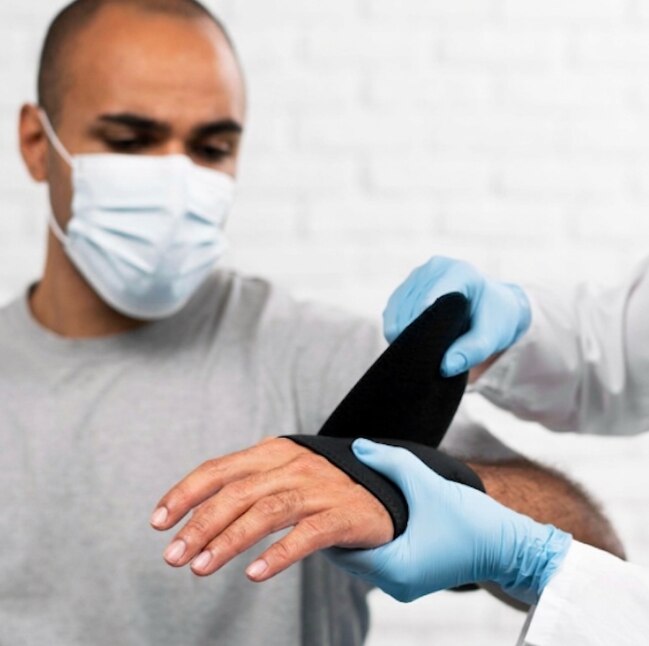
- A wrist splint to limit painful motion while tissues settle.
- Hand therapy for wrist pain, including controlled motion, strengthening, and guidance on returning to work or sport.
- An anti-inflammatory medicine when it is medically safe for you, considering kidney disease, ulcers, blood thinners, pregnancy, and other risks.
- A diagnostic wrist injection when the examination and imaging leave the pain source uncertain. Temporary relief can support a joint source, but it does not identify every tear or guarantee that surgery will help.
The appropriate trial length depends on the suspected diagnosis, symptom severity, examination findings, and imaging. A stable irritation may receive a period of protection and rehabilitation, while a suspected ligament or TFCC injury may need a different plan and closer reassessment.
A major instability pattern, acute injury, or mechanical locking should not be delayed simply to complete an arbitrary number of weeks.
When is wrist arthroscopy not the first choice?
Arthroscopy is not the first choice when pain signals an emergency or comes from outside the wrist joint. The main wrist arthroscopy alternatives depend on the cause:
- Fever with a hot, red, swollen wrist, drainage, new numbness, or weakness needs timely assessment for infection or neurovascular compromise.
- A recent significant injury may require urgent treatment for fracture, tendon damage, or dislocation.
- An unstable or displaced fracture usually needs wrist fracture fixation to restore alignment.
- Major or chronic wrist instability from a scapholunate or lunotriquetral ligament tear may need open reconstruction or another stabilization procedure.
- Advanced wrist arthritis or widespread degenerative change calls for arthritis treatment rather than inspection of damaged joint surfaces.
- A ganglion or other mass may require mass removal.
- Nerve compression or an extra-articular tendon disorder needs nerve or tendon assessment.
- Pain referred from the neck, elbow, shoulder, or another joint requires evaluation of that source.
Arthroscopy can grade selected ligament and TFCC injuries, but it is not a general-purpose search when the pain source remains unclear. When examination, imaging, or a diagnostic injection points elsewhere, treatment may involve therapy, splinting, medication, an injection, fixation, open surgery, or observation instead.
What should you expect if arthroscopy is recommended?
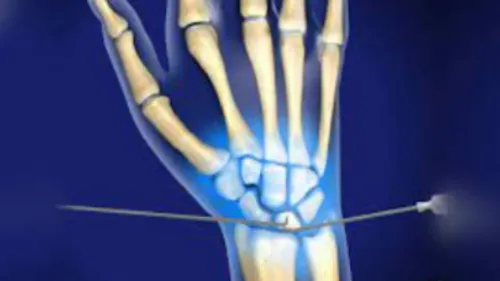
A recommendation for arthroscopy does not automatically mean that a repair is planned. The surgeon may propose diagnostic wrist arthroscopy to inspect the joint when scans and examination have not identified the pain source, or therapeutic wrist arthroscopy when a treatable lesion is already suspected.
| Option | What happens | What it can answer |
|---|---|---|
| Diagnostic wrist arthroscopy | The surgeon inspects the joint with a camera | Whether cartilage, TFCC, scapholunate or lunotriquetral ligaments, synovium, or a loose body is damaged |
| Therapeutic wrist arthroscopy | Inspection is combined with treatment | Whether tissue can be trimmed, a loose body or ganglion removed, or a selected tear repaired during the same operation |
The chosen radiocarpal portals can show the TFCC, cartilage, joint surfaces, and the undersides of key ligaments. Midcarpal portals provide a different view of intrinsic ligament injury, carpal alignment, and cartilage changes. A major chronic instability pattern may still require open reconstruction rather than arthroscopy alone.
If repair is performed, wrist arthroscopy recovery usually takes longer than recovery after inspection or simple debridement. Repair restrictions can include splinting and delayed loading. Ask specifically about wrist arthroscopy risks, including infection, stiffness, persistent pain, sensory-nerve or tendon injury, complex regional pain syndrome, and swelling from traction.
Use the consultation to ask:
- What exact finding are you trying to confirm?
- Which portal and treatment might you use?
- What changes if you find a complete tear, arthritis, or no clear lesion?
- How long will splinting, therapy, and work restrictions last?
Dr.Kishan Rao can help you compare the examination, imaging, injection response, and expected recovery before you consent.
Related service
Hand/Wrist Arthroscopy Hand arthroscopy is a minimally invasive surgical procedure used to diagnose and treat various conditions of the hand and wrist. View service → |
Frequently asked questions
What counts as persistent wrist pain that needs further assessment?
Pain needs assessment when repeated flare-ups continue, worsen, follow activity, or limit work, sport, lifting, gripping, or leaning on the hand. Pain does not need to occur every day.
Which wrist conditions make arthroscopy a reasonable option?
Arthroscopy can be reasonable when examination and imaging identify a treatable problem inside the wrist joint, such as a triangular fibrocartilage complex tear, selected ligament injury, loose body, or cartilage damage.
How do conservative treatments affect the timing of arthroscopy?
Rest from aggravating activity, a wrist splint, prescribed medicines, hand therapy, and activity modification are often tried first. Persistent symptoms or a confirmed structural problem can change the timing.
When is wrist arthroscopy not the first choice?
Arthroscopy is not usually the first choice for an untreated fracture, advanced wrist arthritis, infection, significant nerve compression, or pain without a clear joint source.
What should you expect if arthroscopy is recommended?
Expect a review of your symptoms, examination findings, scans, anesthesia plan, procedure goals, risks, recovery restrictions, and hand-therapy needs before surgery.